

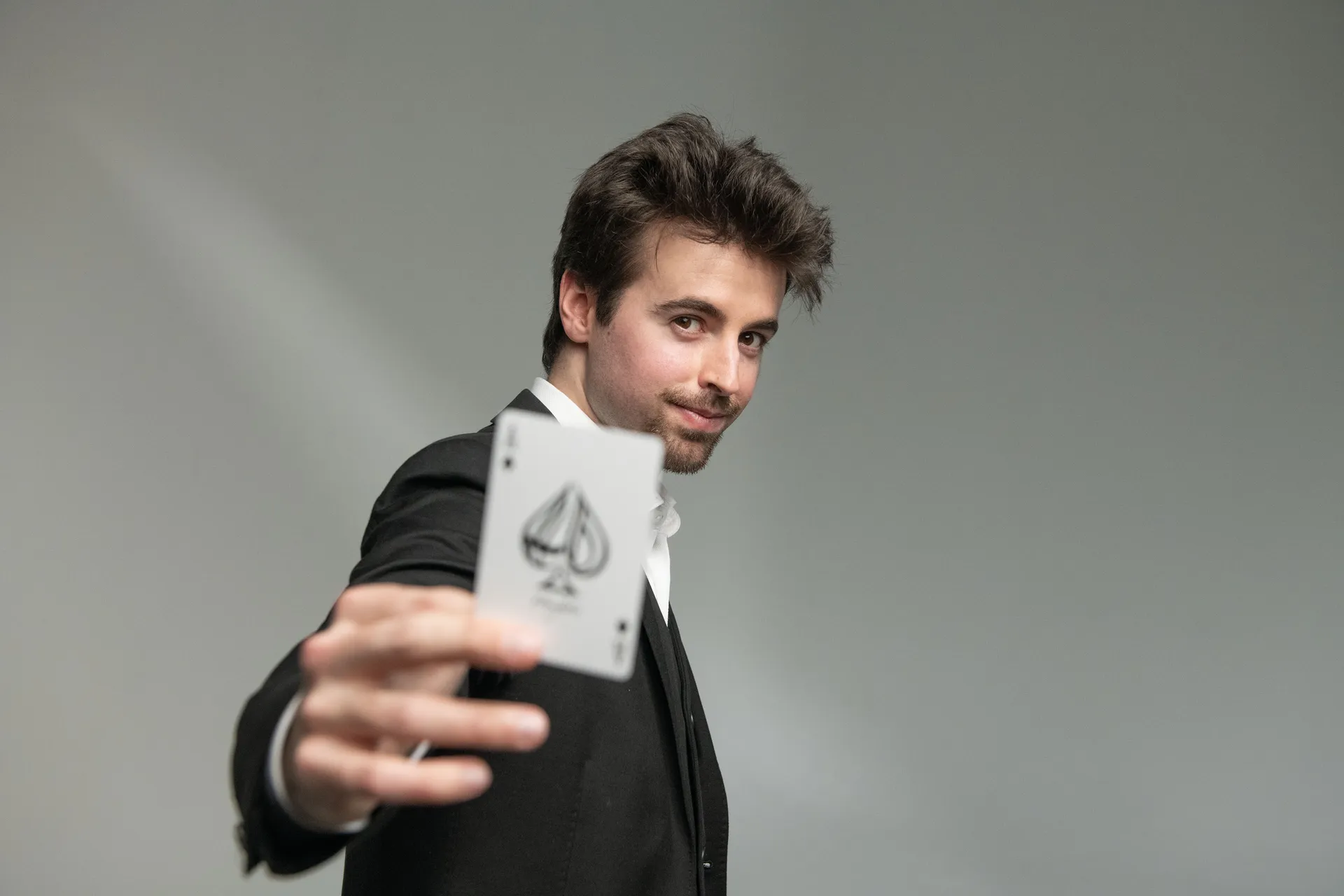
The arts of illusion have always fascinated humanity, leading us to question the boundaries of reality. On stage, two primary disciplines often face off: mentalism and magic. While both fall under the broad umbrella of illusionism and aim to amaze, they are distinguished by subtly different approaches, aesthetics and tools; these differences ultimately radically change the audience’s perception of the performance.
Understanding these distinctions is not just a point of curiosity for enthusiasts; it is fundamental to fully appreciate the mastery and specificity of each artist.
The most immediate and significant difference between the two arts lies in their preferred object of illusion. Magic, or sleight-of-hand, is historically “for the eyes”: it primarily relies on the physical manipulation of objects, dexterity, optical illusions and large stage setups. The goal is to show the impossible through the visual alteration of reality, such as making objects levitate, people disappear, or rabbits emerge from a hat.
Mentalism, conversely, is “for the mind.” The mentalist focuses his performance on the illusion of authentic and seemingly unexplainable psychic and mental powers. The effects focus on demonstrations of abilities such as:
Essentially, the magician manipulates objects and the environment, while the mentalist manipulates the audience’s perception and attention to explore the potential of the human mind.

The magician’s show, often also called an illusionist’s show, is built upon manual dexterity and stage technology. Some techniques employed include:
The magician does not hide the intent to perform a “trick”, but his art lies in executing it so flawlessly that the mechanism becomes invisible and the result unexplainable. The goal is pure and simple visual astonishment. The spectator knows they are being deceived, but they cannot figure out the mechanism.
Unlike the magician who relies on dexterity, the mentalist bases his experiments on a profound understanding of human psychology and communication. While the final effects are illusionary, the tools used are deeply rooted in well-studied disciplines.
The core techniques of mentalism are not paranormal powers, but rather acquired and refined skills that include:
The mentalist is a skilled “psychologist” and communicator who creates a narrative whose ultimate goal is to amaze and enchant the audience, while also stimulating doubts and reflections on the potential of the human mind.
The aesthetic and scenic approach is another key distinguishing element. Classic magic is often more theatrical and conspicuous. The magician may wear flashy costumes, utilize elaborate props (such as hats, capes, and mysterious boxes) and his performance is expressly aimed at entertainment and wonder.
Mentalism, in contrast, tends to have a more “subdued,” sophisticated and penetrating presentation. The mentalist often uses minimal or everyday props (such as notebooks, pens, slips of paper) and the setting is designed to evoke the atmosphere of a psychological experiment or a scientific demonstration.
This style contributes to the suspension of disbelief, pushing the audience to expand their beliefs about the mind’s capabilities, even though they inherently know it is an illusion.
Ultimately, the most important distinction is manifested in the experience the audience lives.
With magic, the spectator is led to say: “Wow! How did he do that?”. The focus is on the impossibility of the physical action and the search for the manual “trick”; the dominant emotion is visual surprise.
With mentalism, the reaction is often deeper and more unsettling: “That’s impossible. Did he really read my mind?”. The focus shifts inward, stimulating a reflection on the limits of the mind and individual will. The experience is more intimate and psychologically engaging, as the illusion plays with the spectators’ personal beliefs, memories, and choices.
In summary, while the magician charms our eyes with the impossible, the mentalist challenges our mind with the seemingly limitless potential of the psyche, offering shows that, though both forms of illusion, strike deeply different emotional and rational chords.